



Design Studio Learning
Why class size matters with design education?
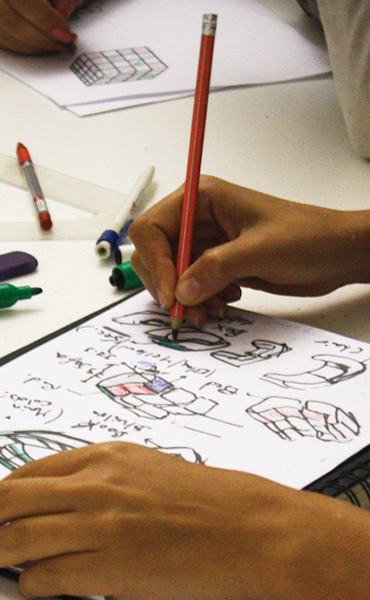
Design courses at FIDI are taught through research, drawing, modelling, technical development, critique and revision. The number of students sharing a studio teacher therefore directly affects the opportunity for individual discussion and project feedback. FIDI provides high-contact, small-group studio education, with design-studio groups averaging 10 students. This enables regular interaction with professional teachers throughout each student's project, from initial concept and spatial planning through materials, lighting, technical resolution and final presentation.
FIDI is one of Italy’s largest Interior Design schools, with more than 150 students currently enrolled. Students are subdivided into smaller studio groups to allow substantially greater opportunities for individual feedback and more direct academic contact than with a typical design studio group size and is substantially below even the historical interior design accreditation standards such as those of CIDA/NASAD which have a maximum group size benchmark of 15-20 students per design studio
Prospective students comparing design programmes should ask specifically how many students normally share one teacher during a design-studio session. An institution-wide student/faculty ratio does not necessarily indicate the size of the actual studio teaching group.
Why contact hours are important?Design education requires sustained interaction between student and teacher. While many design programmes may provide a similar number of scheduled teaching hours, the number of students sharing those hours directly affects the opportunity for individual teacher interaction. Smaller studio groups allow more time for demonstrations, technical instruction, individual desk critiques, project reviews and iterative feedback.
Are assignments individual or collaborative?
Principal FIDI design projects are developed individually, allowing each student to experience and demonstrate the complete design process. There are also a few selected collaborative assignments since collaboration is an important professional skill, but FIDI does not use group work as a substitute for individual mastery of concept development, layout planning, materials, technical drawing, modelling, visualisation and presentation.
How frequently do students receive individual feedback?
Students receive regular individual desk critiques throughout studio projects, typically bi-weekly, rather than relying only on assessment at the end of an assignment. Individual project reviews normally take place bi-weekly during studio teaching, plus weekly meetings for supportive smaller weight courses.
How does this compare with architecture education?Small group studio teaching is well established in professional architecture education. Architecture accreditation systems of Canada and US examine whether programmes provide sufficient staffing and teaching resources to support studio learning and individual teacher interaction. As an international benchmark, Canadian architectural accreditation recommends approximately 12–15 students per studio instructor, with 15 as the maximum, while recent data across accredited US professional architecture programmes (NAAB) indicates an average of approximately 13 students per instructor in professional design studios.
How group sizes affect design students?
Contact hours alone do not indicate the amount of individual teacher access a design student receives. If two design schools both provide 600 scheduled contact hours per year, but one teaches studio groups of 10 students and another teaches groups of 20 students, the available teacher time is shared among twice as many students in the larger group. All other factors being equal, a student in a 10 person studio therefore has approximately twice the potential access to individual teacher attention as a student in a 20-person studio. This distinction is particularly important in Interior Design and Graphic Design because studio teaching depends on individual desk critiques, demonstrations, technical guidance, project reviews and repeated feedback throughout the development of each student's work.
How this translates to more effective contact hours per student?Same contact hours + half the students = approximately twice the potential individual teacher access. Recognized specialist design accreditation practice has historically constrained studio size precisely because studio education depends upon individual critique, iterative feedback and close faculty/student interaction.
Is there help outside of class time?Support also extends beyond scheduled class hours. Video recordings and course-specific templates are provided for lessons, allowing students to review technical processes and reinforce skills independently. FIDI also provides teaching-assistant support at no additional cost, giving students additional opportunities to receive practical and technical assistance outside normal studio classes.